

Convalescence
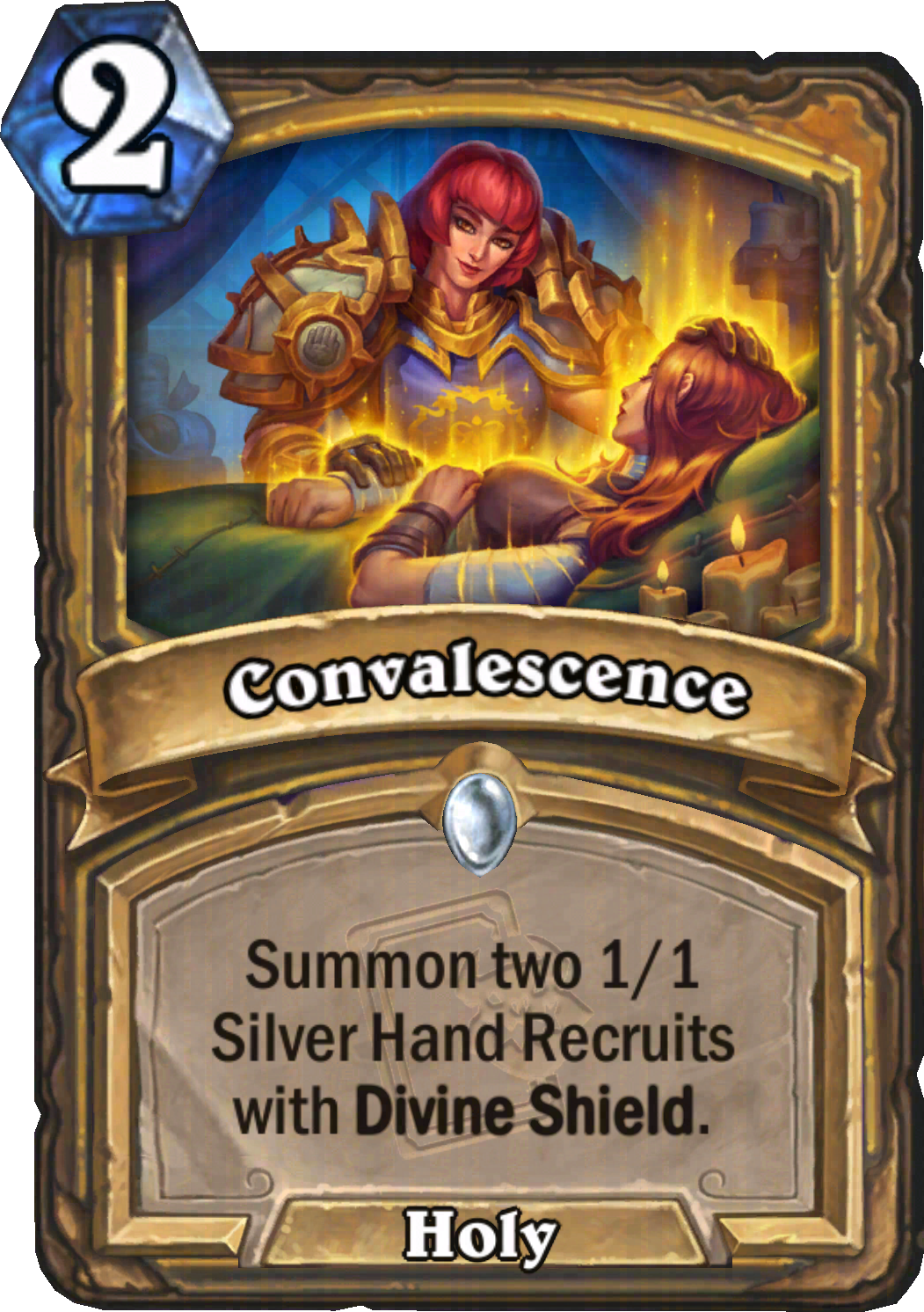
This spell is a solid turn 2 play for Paladin and a strong foundation to the supported Silver Hand Recruit Paladin archetype in this class set, also fondly known as “Dude Paladin”. Convalescence is a 2-drop that scales extremely well with buffs due to the Divine Shield magnifying any attack buffs given to future Silver Hand Recruits.
Another important synergy to consider is Violet Treasuregill. Convalescence offers an easy target to the 2-mana murloc that improves the early-game consistency of this archetype. It is possible that this package will be used in other aggressive Paladin decks going forward as well. A vanilla Aggro Paladin deck likely runs Convalescence without any reservations.
We think this is a ubiquitous card for any initiative-focused Paladin deck going forward.
Score: 3
Emboldening Blade
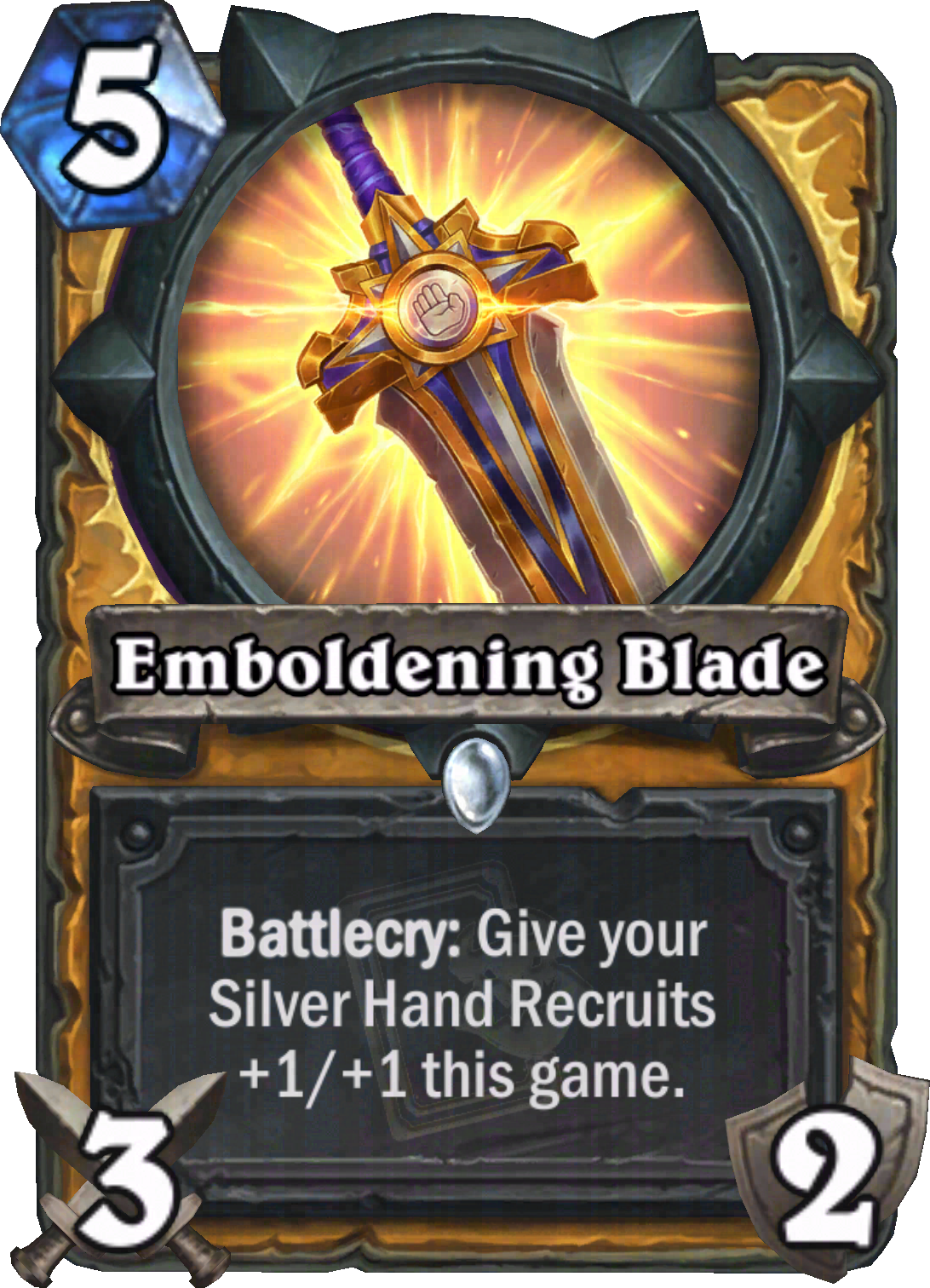
This weapon buffs all existing and future Silver Hand Recruits on board and in hand. The name of the game for a Dude Paladin archetype is the board, though, so this weapon is relatively underwhelming when compared to past Silver Hand Recruit payoffs from years ago, such as Quartermaster and ‘Level Up!‘.
There is little chance we are happy to play this weapon without having a strong board of Silver Hand Recruits in play, while its high mana cost means it is difficult for us to apply the buff without relying on the opponent failing to respond to a previous turn.
Where Emboldening Blade provides an advantage is late-game scaling. Our issue with this prospect is that it is hard for us to envision a Dude Paladin benefitting from a prolonged game. Even if we assume it has successfully scaled up its Silver Hand Recruits to 3/3’s or 4/4’s, by this time, it is likely that a defensive opponent will be in a more favorable position.
Most importantly, the scaling here is not infinite, and our deck does not consist of 29 Silver Hand Recruit cards (in contrast to Murloc Quest Paladin). Paladin has very few Silver Hand Recruit generators in Standard, so Emboldening Blade does not impact a large chunk of our deck.
Score: 1
Brash Battlemaster
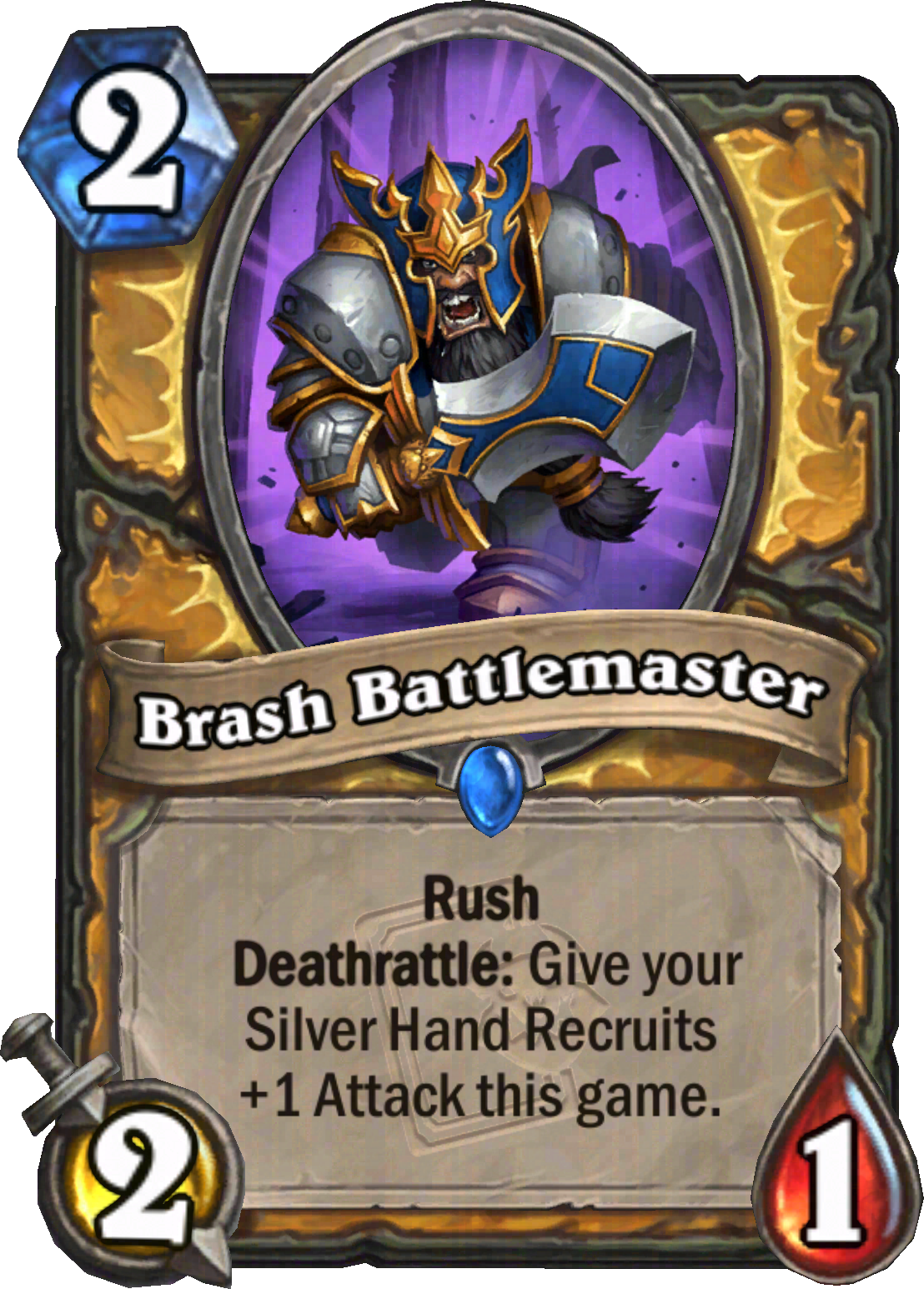
A cheap early-game minion with an impactful buff on Silver Hand Recruits, wherever they are. The important trait of this minion is that it is cheap. Battlemaster is a strong setup card for a turn 3 Muster for Battle and/or a turn 4 Teamwork, making these plays significantly more threatening to the opponent. It also works extremely well with Convalescence, as Divine Shield becomes stronger with a higher attack value.
This looks like a mandatory inclusion for a Dude Paladin deck that runs these cards, but it is reliant on the archetype’s success to see competitive play. Unlike Convalescence, this should not be a ubiquitous inclusion in all aggressive Paladin decks going forward.
Score: 2
Teamwork
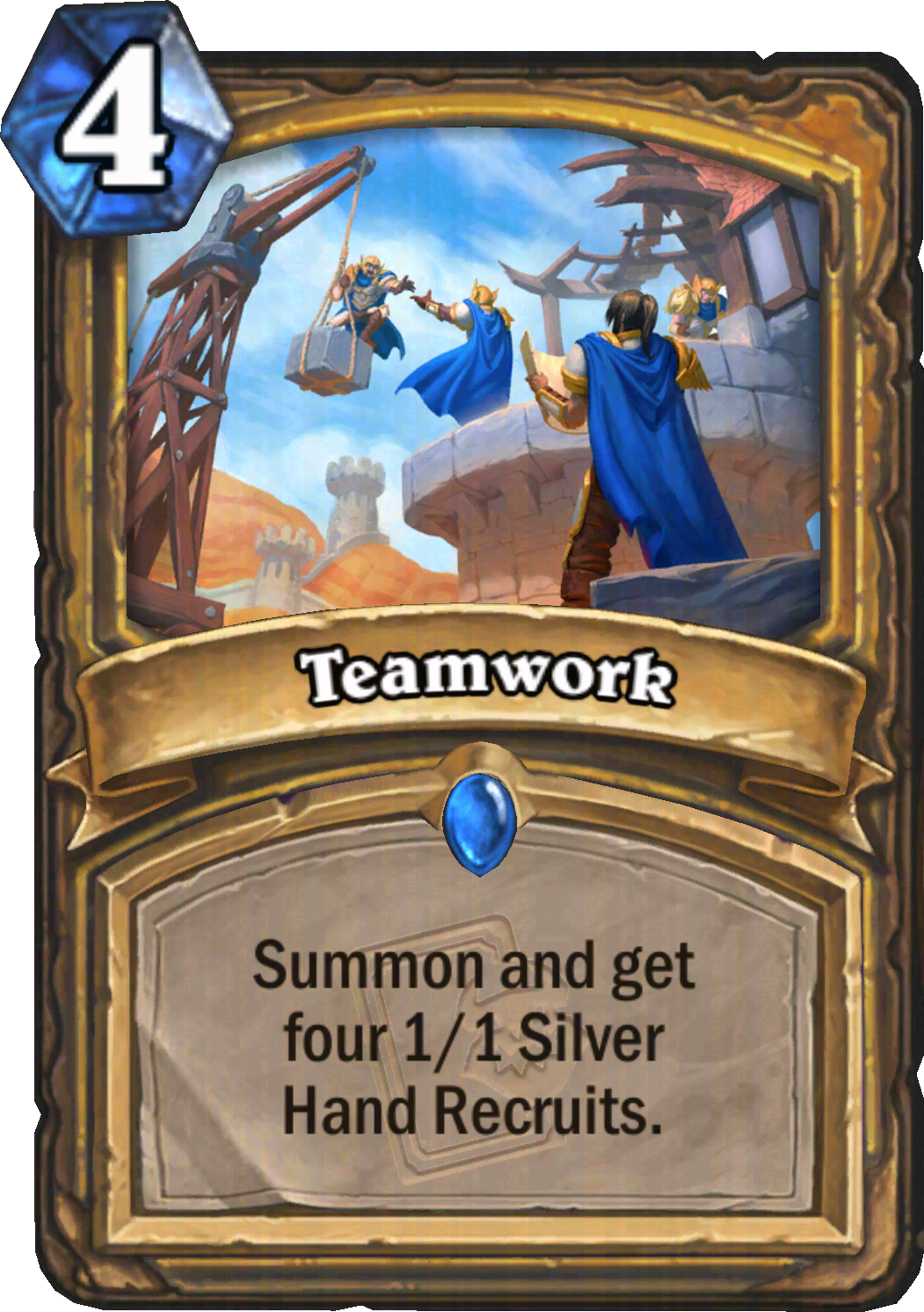
Dude Paladin’s biggest source of Dudes. This spell summons just 4 Silver Hand Recruits to the board, making it notably weaker than Stand Against Darkness, a similar spell that rarely saw competitive play. The trade-off is that Teamwork adds Silver Hand Recruits to our hand, which allows us to develop them in a future turn. Considering the amount of buffs that we can land on Silver Hand Recruits, these generated tokens might become increasingly threatening for their cost.
Considering the scarcity of “dude generators” in Standard, Teamwork looks like a mandatory inclusion for the archetype if we want to make the buff cards work. This is not a resounding endorsement.
Score: 2
Charity
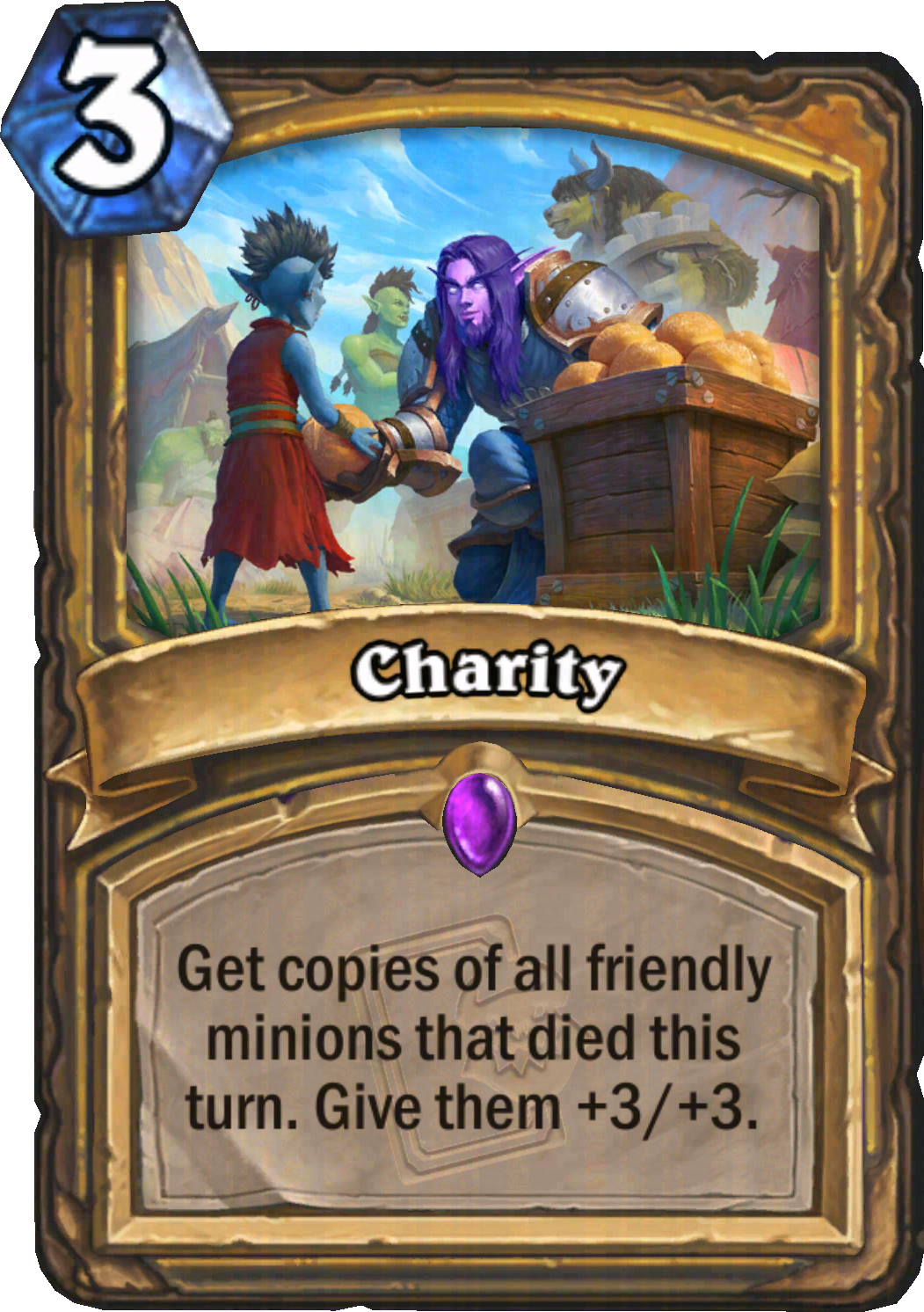
We are always wary of cards that require us to run our minions into something before getting value for them. Charity’s theoretical role is easy to understand. We flood the board with dudes, we trade them into enemy minions, and we generate bigger ones with Charity.
The reason why we do not like cards like Charity is that if our board is sizeable, we want to buff our board and go face. Killing our opponent is more important than generating value, and the situations where Charity is theoretically good are situations where we should be winning the game without it.
In contrast, if we ever fall behind, Charity is useless and dead in our hand.
This is not the first card of its kind, which we describe as “token sacking cards”, and these cards consistently do not see play for this reason. We will be surprised if a slower deck uses it too, as there are better ways to generate value for late-game strategies.
Score: 1
Resilient Savior
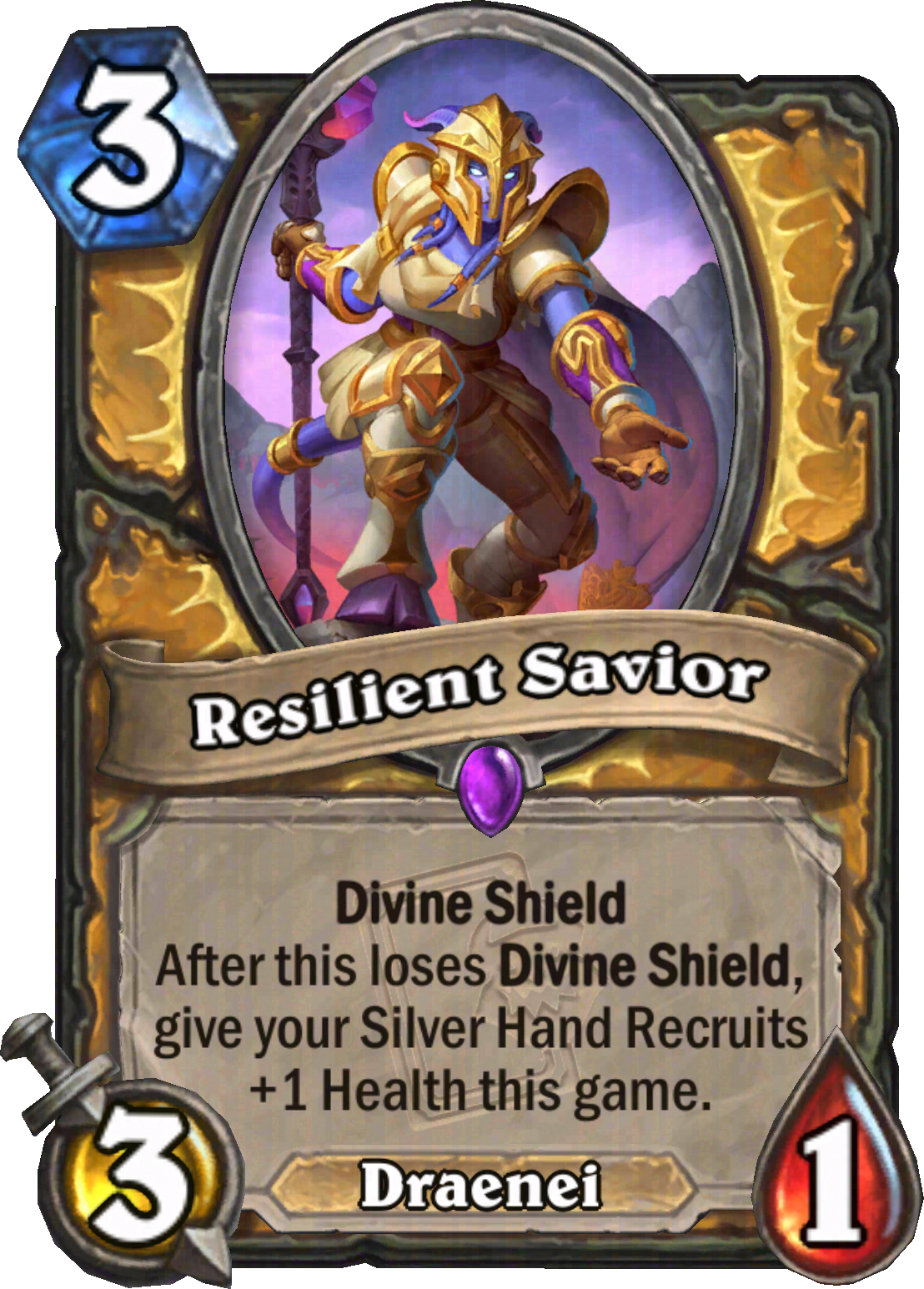
While Battlemaster buffs attack, Savior buffs health. Buffing health is arguably more important if we want to produce resilient boards that are more difficult to clear.
Unfortunately, Savior is slower and lacks an immediate impact on the board, making it a more difficult card to accommodate. Scarlet Crusader in 2026 does not sound appealing. Nevertheless, it is likely an important tax that Dude Paladin will have to pay if it wants its Dude boards to stick and become more powerful at the later stages of the game.
Note that Savior can execute its buff multiple times if it loses its Divine Shield and then we apply it back, but this scenario is not going to happen often as its single point of health makes it easy for the opponent to clear.
Score: 2
Arator the Redeemer
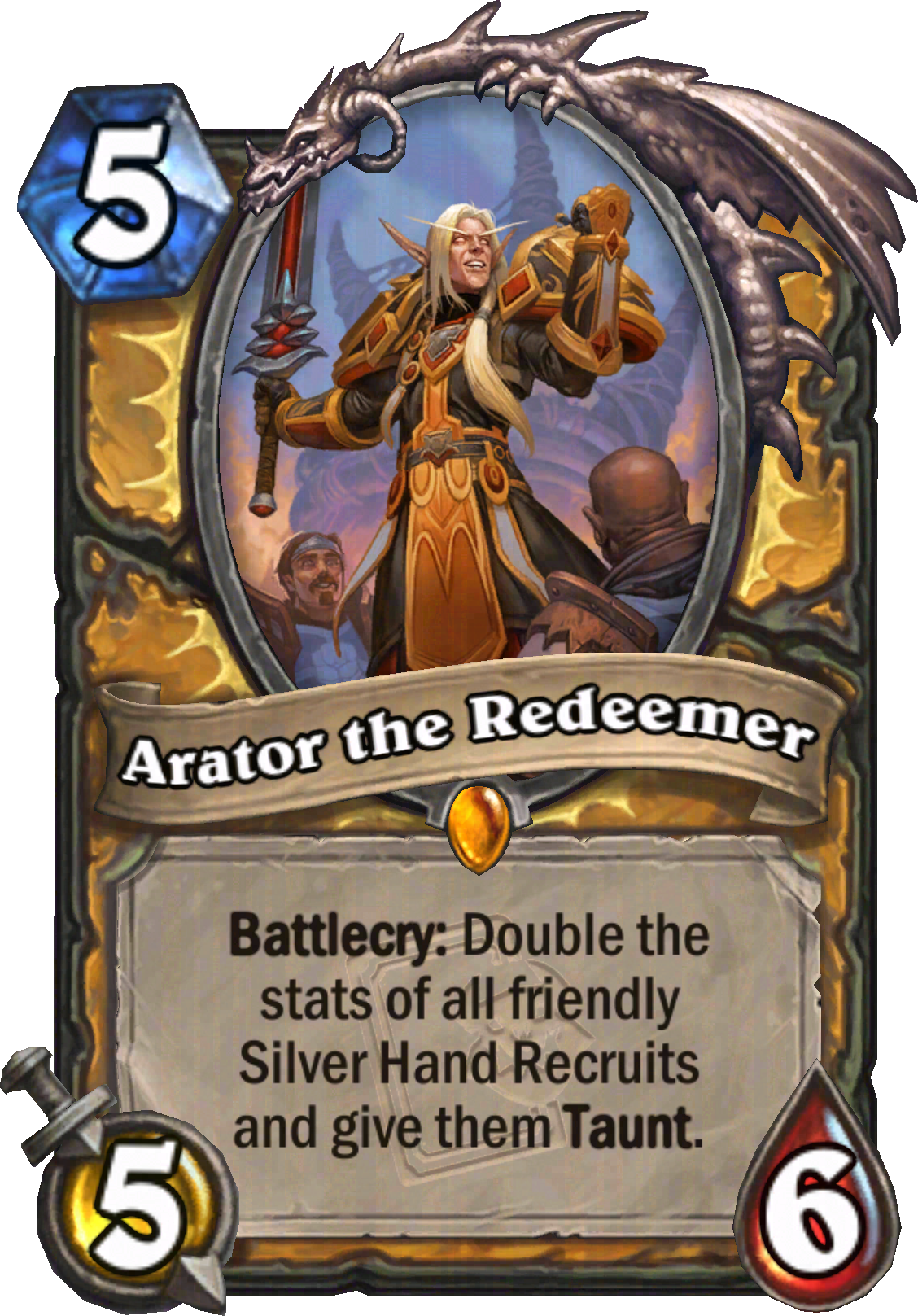
This is the biggest payoff and finisher for the Dude Paladin archetype in this set. Arator only works on Silver Hand Recruits that are on the board, but it doubles their stats while giving them taunt, making it a dramatic buff card that works particularly well on Silver Hand Recruits that were already buffed by Savior and Battlemaster. In this case, it is a more powerful finisher than Level Up! and Quartermaster. It has a big body on top of the ability, so on paper, it does not need to buff a lot of Silver Hand Recruits to represent good stats on curve.
However, we can only run one copy of Arator in the deck, which makes our finishing capabilities less consistent. Arator’s power is somewhat reliant on our scaling, so it is less likely to be a powerful turn 5 play, unless our opponent has disconnected.
We would say this legendary is flashy, but extremely reliant on the archetype to work, as it is strictly a finisher rather than a card that can carry the archetype from turns 1 to 5, which are the most critical turns for a board-flooding deck.
Score: 2
Final Thoughts
We think Dude Paladin might be the strongest new archetype coming from these class sets, though that may not say much considering what we think of the other potential candidates. Dude Paladin still has some issues that may prevent it from being successful, notably the scarcity of Dude generators and its finishing potential. Does this deck prove to be in line with Aura Paladin? And the more important question is, will enough players care if it does?

Cultivating Sprite
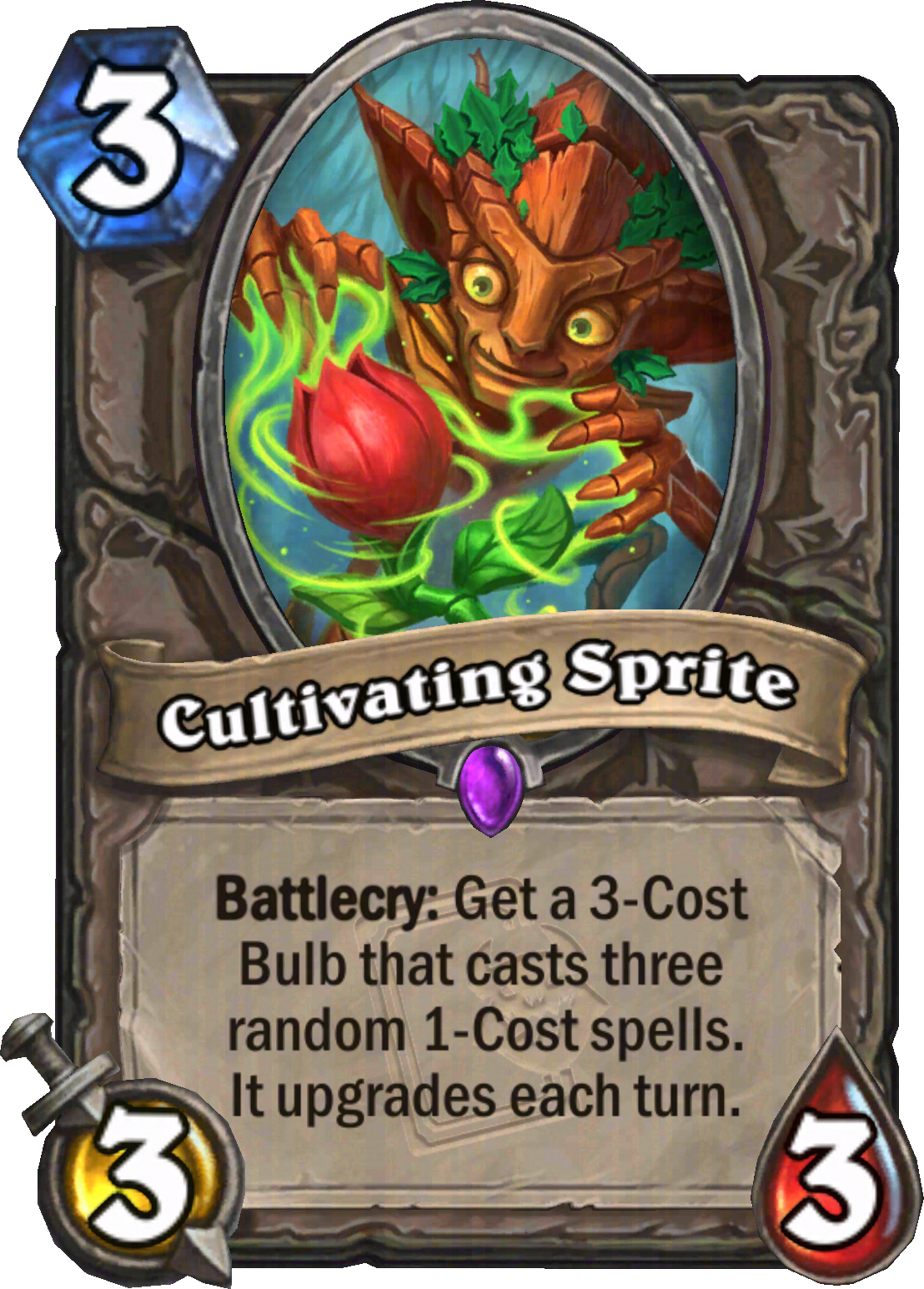
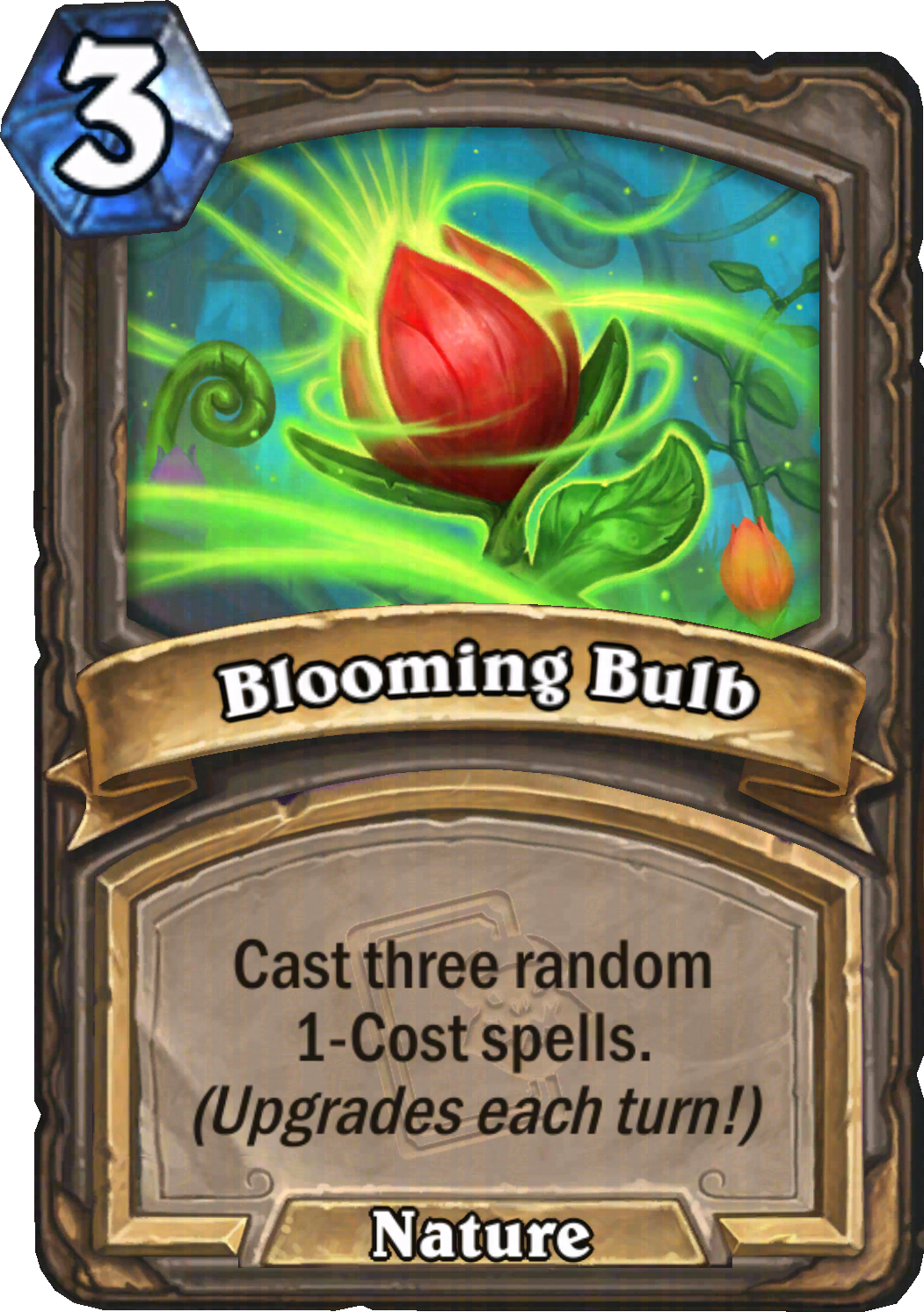
A Gorgonzormu for spells might seem like a strong card at first glance, but there are reasons to slightly temper expectations here. Random spells are significantly worse than minions. With Gorgonzormu, we could instantly play the Cheese on turn 4 and get ahead on board. Blooming Bulb costs 3 mana rather than 2 and does not have the guaranteed positive impact the next turn.
There is a chance slower decks will play this card and keep Bulb in hand for a late-game swing, but we suspect some synergy is required to justify a 3-mana 3/3.
Score: 2
So… be grateful they’re publishing articles at all and putting out as much content as they have. Cuz as you astutely pointed out, there’s still a war going on
I thought you stopped doing these. There wasn’t one for arguably one of the most important expansions of this game’s history.
If you’re referring to Cataclysm, dude literally made a post saying there wouldn’t be a Cataclysm preview because he was in the middle of a war zone ducking in and out of bomb shelters.
https://www.vicioussyndicate.com/content-update-2/
I mean the war is still going on so….
Oh fuck off, you entitled child.
So… you should be grateful they’re publishing articles and putting out as much content as they have. Cuz like you said, there’s still a war going on
Top tier rage bait or just an entitled brat. Can’t tell which tbh
Entitlement at its finest.
So… be grateful they’re publishing articles at all and putting out as much content as they have. Cuz as you astutely pointed out, there’s still a war going on
From how Tranquil Clearing is worded, I suspect it would be more like red card. You could use it to force a taunt minion your opponent has to go dormant. This sounds reasonably good to me.
Asleep and dormant aren’t the same thing though, that’s the issue. Asleep just makes it unable to attack this turn, like if it was summoned this turn